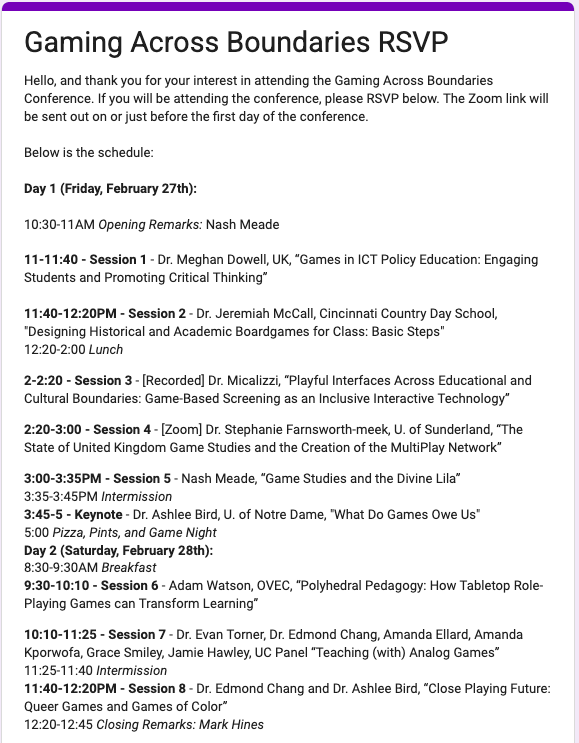
I just got back from a short trip down to the University of Kentucky for the Gaming Across Boundaries conference. The event was supported by the Gaines Center for the Humanities and the departments of English, WRD, and Information Sciences. According to the call for participation, the conference addressed the following:
Despite the outsized influence of technology on everyday cultural practices and classrooms, its role has never been more contested. Indeed, even in the case that such practices are not digitized, our societal roles are increasingly governed by systemic expectations, rules, and algorithms. These expectations create hierarchies, enforce boundaries, and classify individuals and their work.
This conference seeks to uncover techniques and ideologies behind this shift, particularly through the valence of games, gaming, and interactive technology. Such research, collaboration, and debate are more urgent now than ever. Rhetoric and practices of surveillance, gamification, and instrumentation threaten the creative and critical power of the postsecondary classroom space and the very playfulness of games as a medium. What assumptions underlie the digital systematization of our personal and professional lives, in contrast to the liberating power of digital connectivity? How might technology (digital and analog) transform or challenge perceptions, rather than reinforcing the status quo?
We welcome individual submissions as well as submissions for panels. As this conference intends to evoke partnership across institutional boundaries, we are especially interested in proposals which highlight institutional challenges and collaborations around technology and games both nationally and internationally. As such, we welcome inter/multidisciplinary submissions from the humanities as well as the social, technical, and physical sciences. We are open to online or hybrid panels, and we especially welcome interactive, experiential, or pedagogical presentations. This conference will be hosted in the UK Esports Lounge, which supports a variety of creative presentation modes and modalities.
The conference will take place February 27th and 28th in the UKFCU Esports Theatre in The Cornerstone (401 S Limestone, Lexington, KY). We are also pleased to be hosting a Keynote Address by Dr. Ashlee Bird, Assistant Professor at Notre Dame.
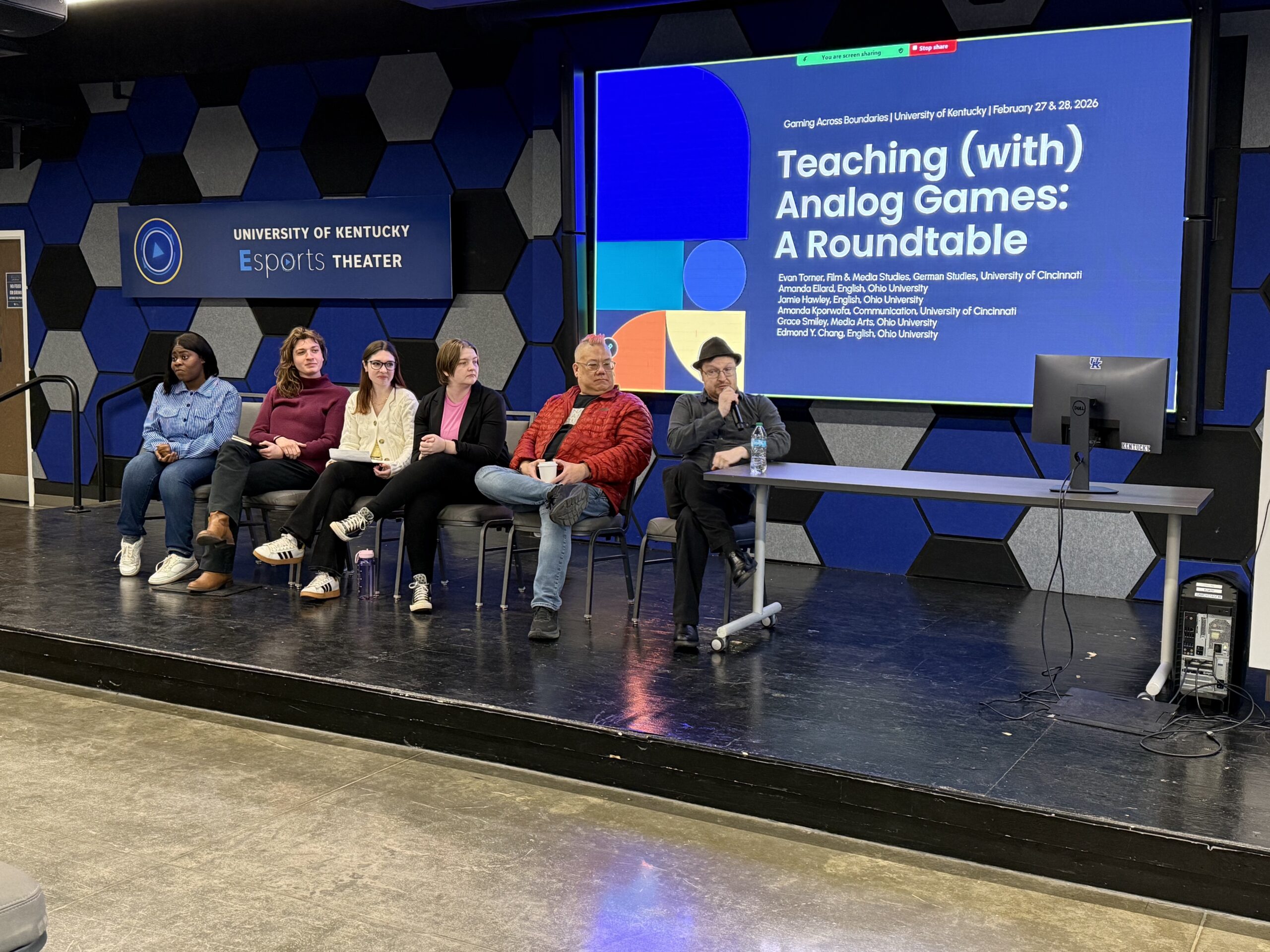
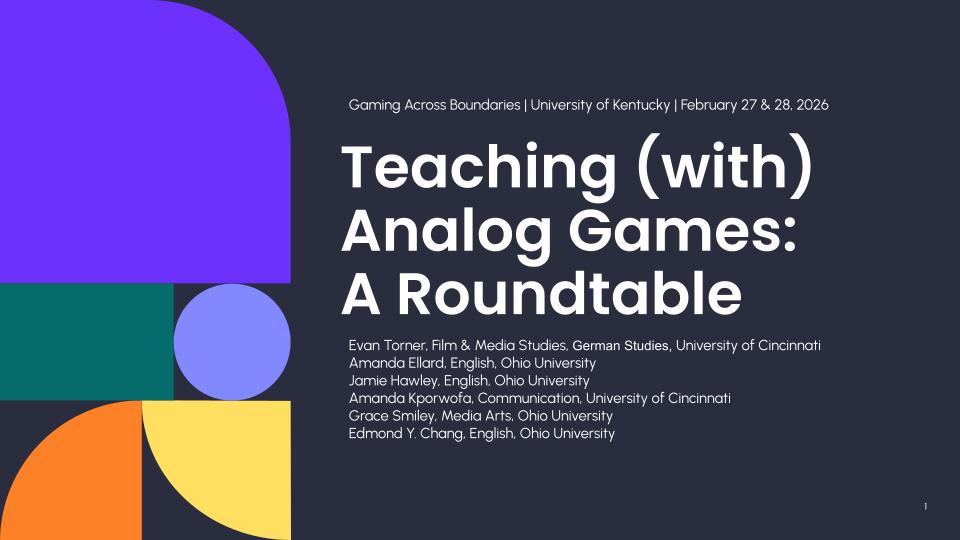
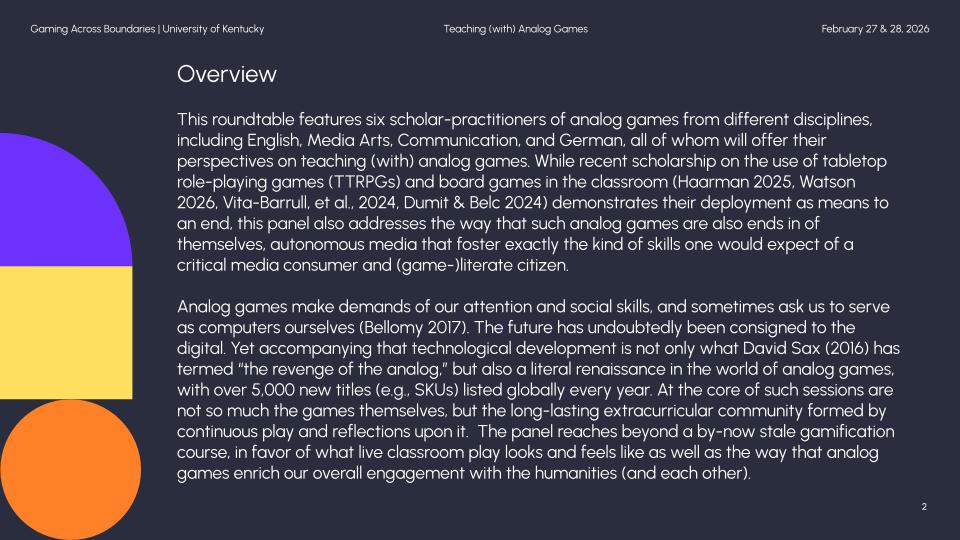
I was part of a roundtable on “Teaching (with) Analog Games,” organized by Evan Torner, and featured a number of our graduate students. Each of us offered up short explanations of how we teach with analog games and why analog games are important to the classroom, to pedagogy, to community organizing, and to social and cultural change.
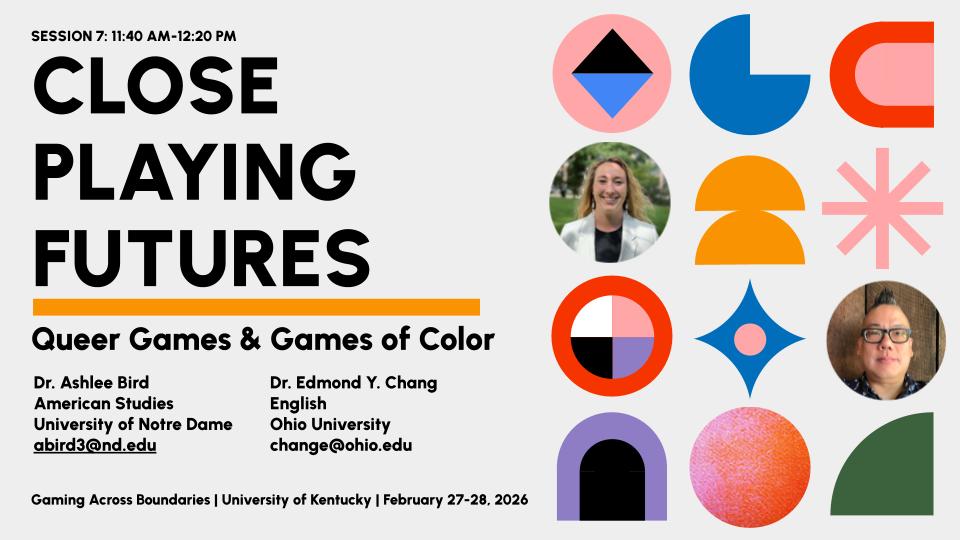
I was also part of a workshop with Ashlee Bird on “Close Playing Futures: Queer Games & Games of Color.” We argued that one of the ways to challenge the norms of video games and gaming cultures, particularly regarding race, gender, queerness, and other marginalized identities and experiences, is to foreground games by and about BIPOC and LGBTQ people.
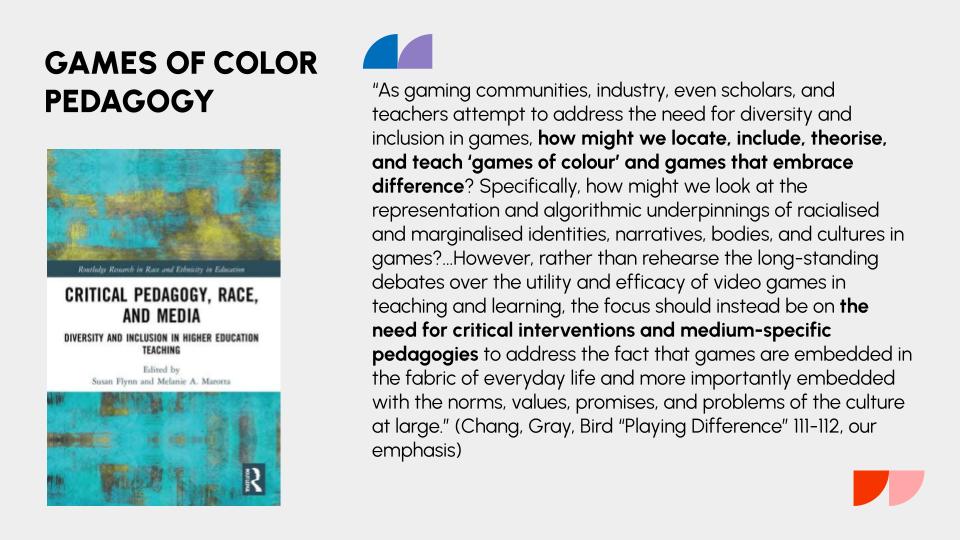
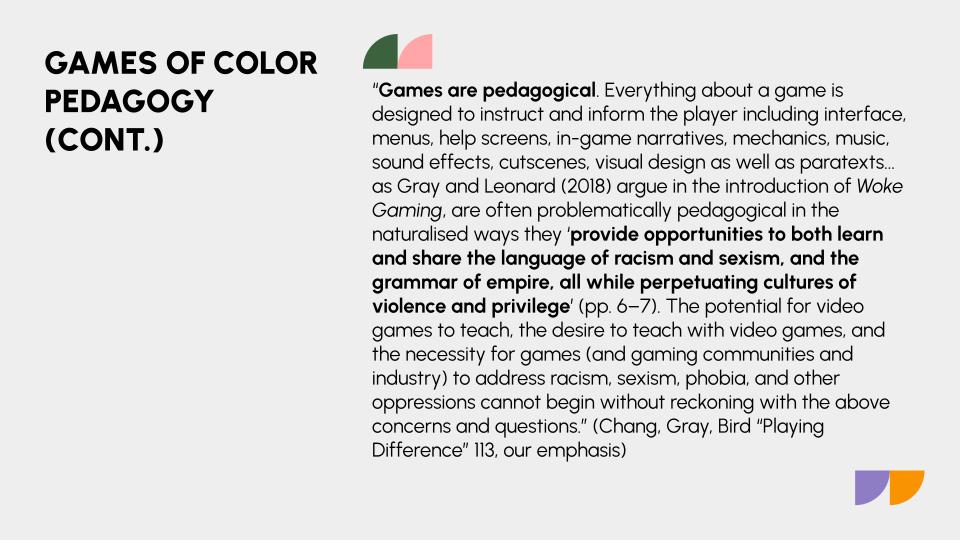
We draw on the essay we co-authored Kishonna Gray entitled “Playing Difference: Toward a Games of Color Pedagogy,” which appeared in Critical Pedagogy, Race, and Media: Diversity and Inclusion in Higher Education Teaching (Routledge, 2021) edited by Susan Flynn and Melanie A. Marotta.
It was a good, short event. And I was really happy to get a chance to catch up with some friends, to see the University of Kentucky and Lexington again, and to meet some other folks working in games and teaching, games and pedagogy.